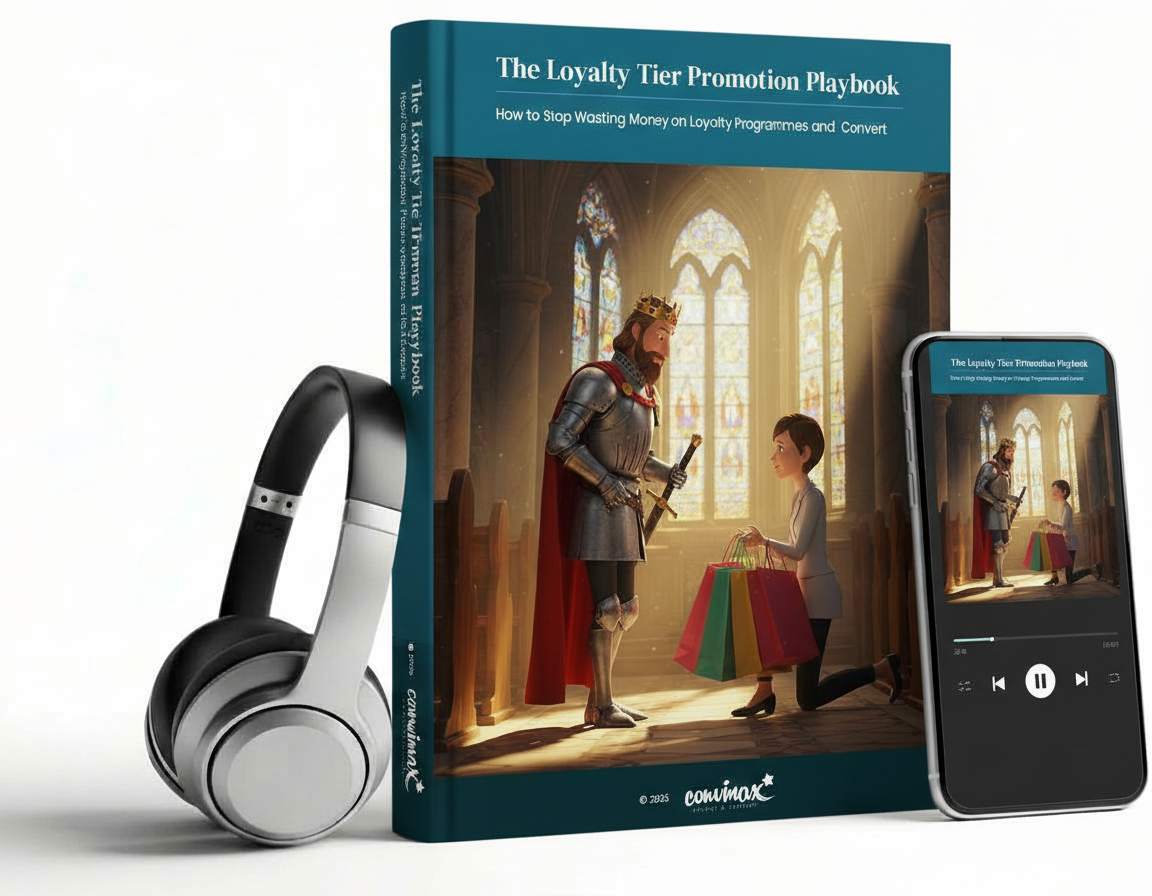
Stop Using Points! The Controversial Truth About Why Your Loyalty Program is Failing
You’ve built the tiers. You’ve written the benefits. You’ve launched the emails.
And yet – the numbers aren’t moving the way they should.
Customers sign up, collect a few points, then carry on spending exactly as before. Your programme exists. It just isn’t working.
Here’s what most e-commerce brands get completely wrong: they confuse having a loyalty programme with running one. The structure isn’t the strategy. The tiers aren’t the tactic. And the research – drawn from three decades of peer-reviewed studies and data from hundreds of millions of sessions – confirms that the gap between a programme that generates passive costs and one that drives compounding revenue comes down to a single, overlooked mechanic.
This article explains exactly what that mechanic is, how it works psychologically, and how to implement it with the kind of rigour that produces results you can defend in a boardroom.
What this article reveals
The findings here aren’t opinion. They’re drawn from academic journals, including Marketing Science and the Journal of Consumer Research, a 13-year longitudinal study tracking over 31,000 purchases, and industry benchmarks from platforms analysing hundreds of millions of e-commerce sessions.
Here’s a taste of what the research uncovers – and what might surprise you:
- The article reveals why 72% of consumers buy more frequently from loyalty programmes – but only under one specific condition that most brands never meet. Are you meeting it?
- The article reveals the exact conversion rate gap between mobile and desktop that should reshape how you display tier promotions – and why fixing your desktop experience first may be the wrong priority.
- The article reveals what a 13-year academic study found changes actually when customers join a loyalty programme – and it’s almost certainly not what you’re currently measuring.
- The article reveals why one of the world’s most recognisable brands scrapped points entirely, and what happened to their revenue in the five years that followed.
- The article reveals the specific percentage uplift in purchase likelihood that paid loyalty tiers produce over free ones – and why most brands are leaving this lever completely untouched.
- The article reveals how much of the average e-commerce conversion improvement is achievable simply by changing where and how you display tier status – no new tech required.
- The article reveals why most A/B tests run on loyalty promotions are statistically worthless – and the minimum you need to run a test that actually tells you something.
- The article reveals the psychological trigger that causes customers to accelerate their spending as they approach a tier threshold – and how to design for it deliberately.
In depth:
- Does The “More Tiers” Myth Sabotage Sales
- Nike’s £700 Million “Points-Free” Strategy
- The “Subordinate Tier” Psychological Hack
- Do Paid Loyalty Programs Outperform Free Ones
- The Mobile Conversion “Terror” Statistic
- Discounts are Not What Customers Actually Want
- Most “Loyalty Successes” are Actually Statistical Luck
This isn’t about adding more tactics to your already overwhelming to-do list. It’s about understanding which lever actually moves the needle – and having the data to prove it to stakeholders.